



RIP kinase
Receptor-interacting protein kinases; RIPK
Receptor-interacting protein (RIP) kinases are a group of threonine/serine protein kinases with a relatively conserved kinase domain but distinct non-kinase regions. There are seven members of the RIPK family, RIPK1-7, some of which have emerged as critical effectors of immunity to infection with a diverse array of bacterial, viral, and protozoal pathogens.
RIP kinases are cellular signaling molecules that are critical for homeostatic signaling in both communicable and non-communicable disease processes. RIPK1, RIPK2, RIPK3 and RIPK7 have emerged as key mediators of intracellular signal transduction including inflammation, autophagy and programmed cell death, and are thus essential for the early control of many diverse pathogenic organisms.
RIP kinase Isoform Specific Products
All Product Categories
-
RIP kinase Inhibitors
(180)
View all products
-
RIP kinase Activators
(10)
View all products
-
RIP kinase Modulator
(1)
View all products
-
RIP kinase Degraders
(5)
View all products
-
RIP kinase Controls
(2)
View all products
-
RIP kinase Ligands
(4)
View all products
-
Receptor-interacting Serine/Threonine-protein Kinase 3 (RIPK3) Proteins
(3)
View all products
-
RIP kinase Related Products (210)
Related Products (210)

-
Recombinant Proteins (3)
-
Antibodies (2)
-
RIP kinase Isoform Comparison
-
RIP1 kinase inhibitor 5
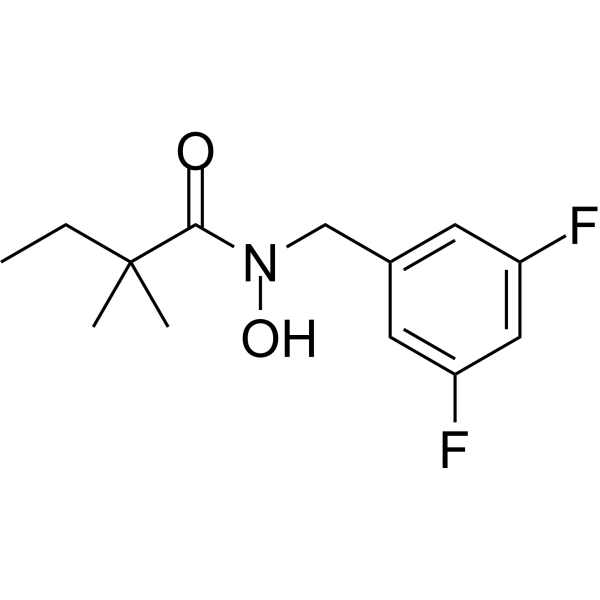 0 ImagesRIP1 kinase inhibitor 5 (example 1) is a potent inhibitor of RIP1, which is used as a checkpoint kinase to control tumor immunity. RIP1 kinase inhibitor 5 is similar with SIR1-365 (compound 13), which inhibits necrosis and iron death activity.
-
RIPK1-IN-9
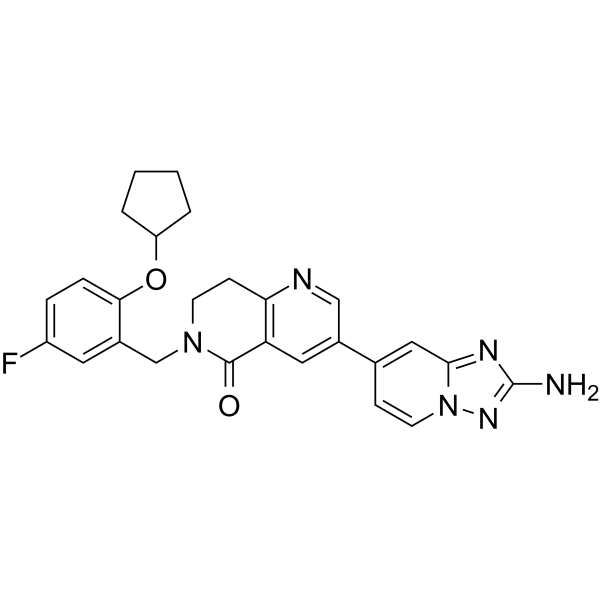 0 ImagesCat. No.: HY-143727CAS No.: 2682889-57-0RIPK1-IN-9 (example 45), a dihydronaphthyridone compound, is a potent and selective RIPK1 inhibitor. RIPK1-IN-9 inhibits U937 cell (IC50=2 nM) and L929 cell (IC50=1.3 nM).
-
RIPK1-IN-20
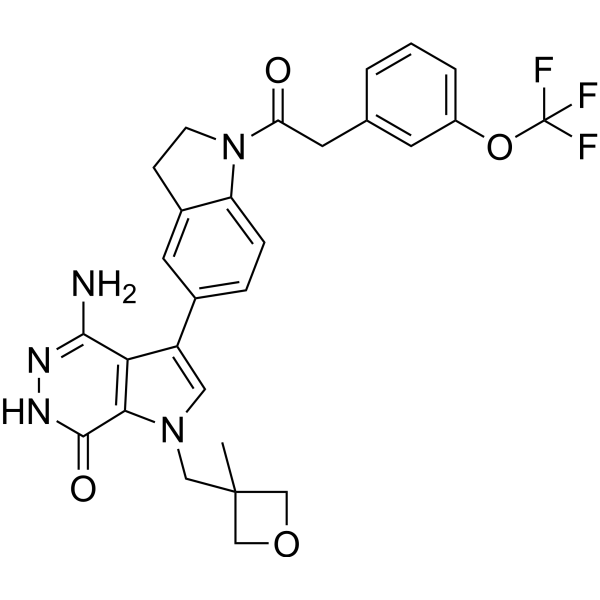 0 ImagesCat. No.: HY-162097CAS No.: 3026543-19-8RIPK1-IN-20 (compound 13c) has a favorable RIPK1 kinase inhibition activity with an IC50 value of 59.8 nM. RIPK1-IN-20 blocks TNFα-induced necroptosis in both human and murine cells (EC50=1.06–4.58 nM).
-
Zharp1-163
 0 ImagesCat. No.: HY-178163Zharp1-163 is a dual inhibitor of ferroptosis and necroptosis. Zharp1-163 effectively blocks ferroptosis by reducing reactive oxygen species (ROS) levels and inhibits necroptosis by potently and selectively targeting RIPK1 kinase activity (KD = 240 nM; IC50 = 406.1 nM). Zharp1-163 inhibits the cellular activation of RIPK1, RIPK3 and MLKL in response to necroptotic stimulation. Zharp1-163 markedly attenuates TNF-α (HY-P1875)-induced systemic inflammatory syndrome, including the prevention of TNF-α-induced mortality and hypothermia in mice. Zharp1-163 significantly alleviates acute kidney injury associated with both necroptosis and ferroptosis in models induced by Cisplatin (HY-17394) and ischemia-reperfusion. Zharp1-163 can be used for the study of diseases associated with cell death pathways, such as kidney disease.
-
RIPK1-IN-16
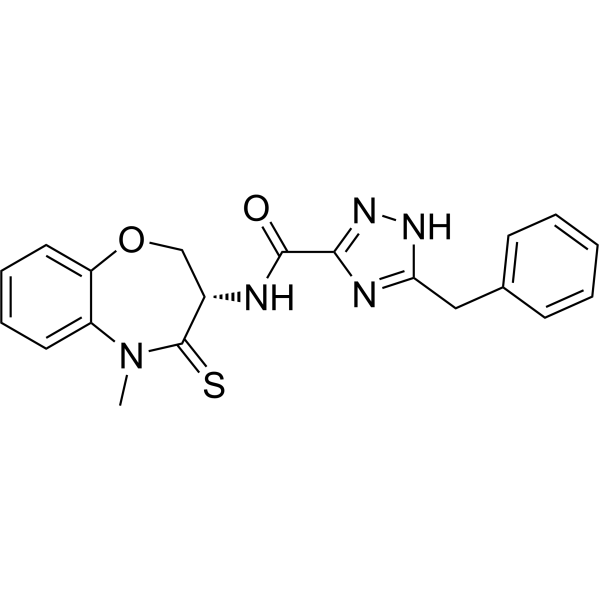 0 ImagesCat. No.: HY-156367CAS No.: 2561431-77-2RIPK1-IN-16 is an orally active and potent inhibitor of RIPK1. RIPK1-IN-16 inhibits excessive inflammation by blocking RIPK1-mediated necroptosis in vivo. RIPK1-IN-16 protects mouse from TNF-induced systemic inflammatory response syndrome and sepsis.
-
RIPK3-IN-5
 0 ImagesCat. No.: HY-172909RIPK3-IN-5 (compound 32) is a potent RIPK3 inhibitor with an IC50 of 27 nM. RIPK3-IN-5 also inhibits necroptosis with an EC50 of 0.45 μM.
-
RIPK1-IN-34
 0 ImagesCat. No.: HY-178464CAS No.: 3065634-19-4RIPK1-IN-34 is a selective, brain-penetrant RIPK1 inhibitor (IC50 = 126.70 nM) with almost no inhibitory effect on RIPK3 (IC50 > 10, 000 nM). RIPK1-IN-34 offers substantial neuroprotection by inhibiting the phosphorylation of RIPK1, RIPK3, and mixed lineage kinase domain-like pseudokinase (MLKL) within the necroptosis pathway. RIPK1-IN-34 shows the neuroprotective effect in a rat middle cerebral artery occlusion (MCAO) model. RIPK1-IN-34 can be used for the study of anti-acute ischemic stroke (AIS).

-
Tat-ASIC1a (1-20) (mouse, rat)
 0 ImagesCat. No.: HY-P10977Tat-ASIC1a (1-20) (mouse, rat) is a competitive ASIC1a membrane-penetrating peptide. Tat-ASIC1a (1-20) (mouse, rat) has significantly neuroprotection effects, and reduces neuronal damage against acidotoxicity by targeting the ASIC1a-RIPK1 pathway and auto-inhibitory mechanism. Tat-ASIC1a (1-20) (mouse, rat) effectively protects brains from ischemic injury in ischemic stroke mice model. Tat-ASIC1a (1-20) (mouse, rat) can be used for neurodegenerative diseases research, such as Huntington disease and Parkinson’s disease.

-
RIPK1-IN-18
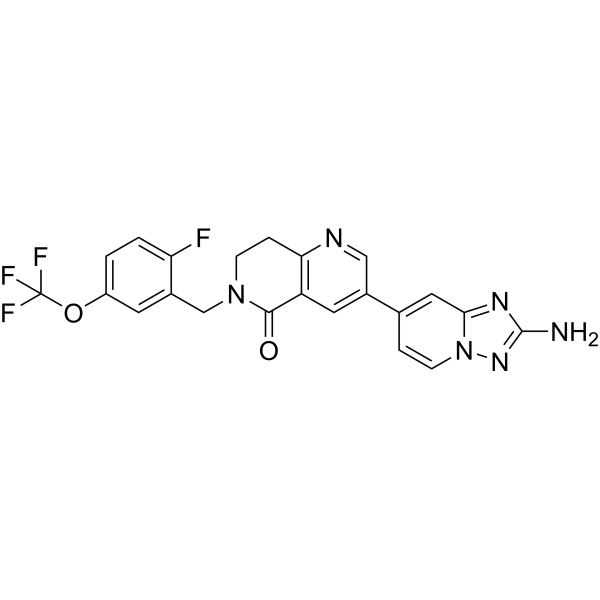 0 ImagesCat. No.: HY-160216CAS No.: 2682889-01-4RIPK1-IN-18 (compound i) is a potent inhibitor of RIPK1. RIPK1-IN-18 can be used in autoimmune diseases research.
-
RIPK1-IN-13
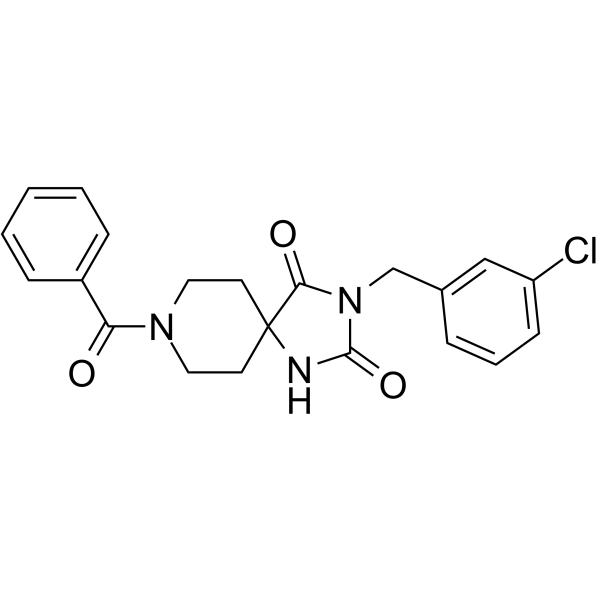 0 ImagesCat. No.: HY-146757CAS No.: 1574547-67-3RIPK1-IN-13 (Compound 8) is a potent inhibitor of RIPK1 with an IC50 value of 1139 nM. RIPK1-IN-13 blocks the activation of the necroptosis pathway via the inhibition of RIPK1. RIPK1-IN-13 has the potential for the research of inflammation diseases.
-
RIPK1/RIPK3-PPI-IN-1
 0 ImagesCat. No.: HY-183564CAS No.: 2915280-95-2RIPK1/RIPK3-PPI-IN-1 is an orally active dual-target inhibitor of RIPK1/RIPK3, with a Kd value of 2.4 nM for RIPK1 and 24 nM for RIPK3. RIPK1/RIPK3-PPI-IN-1 inhibits the phosphorylation of RIPK1, RIPK3 and MLKL, thereby suppressing necroptosis. RIPK1/RIPK3-PPI-IN-1 restores body temperature, improves survival rate, and reduces IL-1β/IL-6 levels in serum and multiple organs of Mus musculus, thus alleviating TNF-α-induced systemic inflammatory response syndrome. RIPK1/RIPK3-PPI-IN-1 can be used in research related to systemic inflammatory response syndrome.
-
NOD1/2-IN-1
 0 ImagesCat. No.: HY-168024NOD1/2-IN-1 (Compound 18) is a potent RIPK2 inhibitor with an IC50 value of 1.4 nM, as determined by the ADP-Glo assay. NOD1/2-IN-1 blocks the production of pro-inflammatory cytokines by inhibiting the NOD1/NOD2 pathways, with IC50 values of 18 nM and 170 nM for NOD1 and NOD2, respectively, thereby reducing inflammatory responses. NOD1/2-IN-1 can be used in studies related to colitis.
-
VWK147
 0 ImagesCat. No.: HY-181062VWK147 is a second-generation HSP90 C-terminal domain (CTD) inhibitor. VWK147 targets the CTD dimerization interface, prevents HSP90 CTD dimerization, disrupts co-chaperone PPID binding to HSP90 CTD, and inhibits HSP90 chaperone function dependent on dimerization. VWK147 reduces protein levels of HSP90 client proteins ULK1, RIPK1, and CDK4 without inducing a heat shock response. VWK147 induces cell death, including apoptosis, in Cisplatin (HY-17394)-sensitive and -resistant urothelial carcinoma cells. VWK147 induces LC3-II accumulation, inhibits autophagosome-lysosome fusion to block canonical autophagy, and induces non-canonical LC3 lipidation independent of ULK1 and PIK3C3 complexes. VWK147 can be used for the research of urothelial carcinoma.

-
RIPK1-IN-38
 0 ImagesCat. No.: HY-179680CAS No.: 3092834-30-2RIPK1-IN-38 is an orally active RIPK1 inhibitor with an IC50 value of 27 nM. RIPK1-IN-38 can inhibit the phosphorylation of RIPK1 and its downstream signaling molecules RIPK3 and MLKL. RIPK1-IN-38 exhibits anti-necroptotic activity. RIPK1-IN-38 has excellent anti-inflammatory efficacy in both the SIRS model and GVHD model. RIPK1-IN-38 can be used for the research of inflammatory and immune-related diseases.
-
RIPK1-IN-11
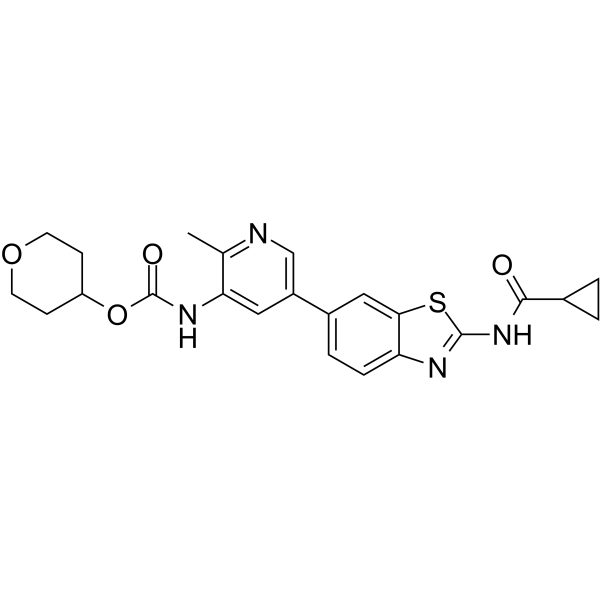 0 ImagesCat. No.: HY-144276CAS No.: 2173557-02-1RIPK1-IN-11 is a potent and orally active RIPK1 inhibitor (Kd=9.2 nM; IC50=67 nM). RIPK1-IN-11 inhibits necroptosis in both human and mouse cells (EC50=17-30 nM). Anti-inflammatory activity.
-
PB830
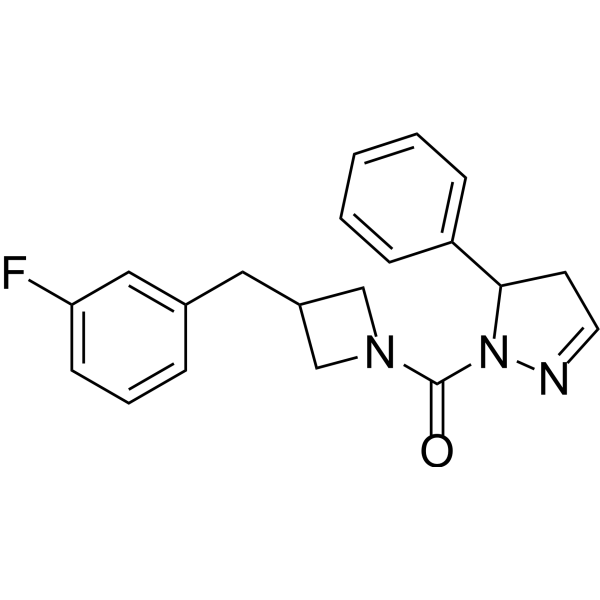 0 ImagesCat. No.: HY-153437CAS No.: 2428401-23-2PB830 (compound 41) is a potent receptor interacting protein 1 kinase (RIP1) Inhibitor with an IC50 of <100 nM for human RIP1. PB830 has an EC50 of 1-100 nM in the cell necrosis assay.
-
LT-1339-553
 0 ImagesCat. No.: HY-184001CAS No.: 3078683-57-2LT-1339-553 is a selective, orally active RIPK1 inhibitor with IC50 values of 4.32, 95.74 and 84.33 nM against RIPK1, RIPK2 and RIPK3, respectively. LT-1339-553 exerts anti-necroptotic activity by inhibiting the AKT/PI3K/NF-κB pathway and the IL-17 pathway. LT-1339-553 reduces liver injury, inflammatory responses and collagen deposition. LT-1339-553 can be used in studies related to schistosomiasis-induced liver fibrosis.




